What to Look for in a Timing Belt Manufacturer Before Specifying Their Product Into a High-Cycle Application
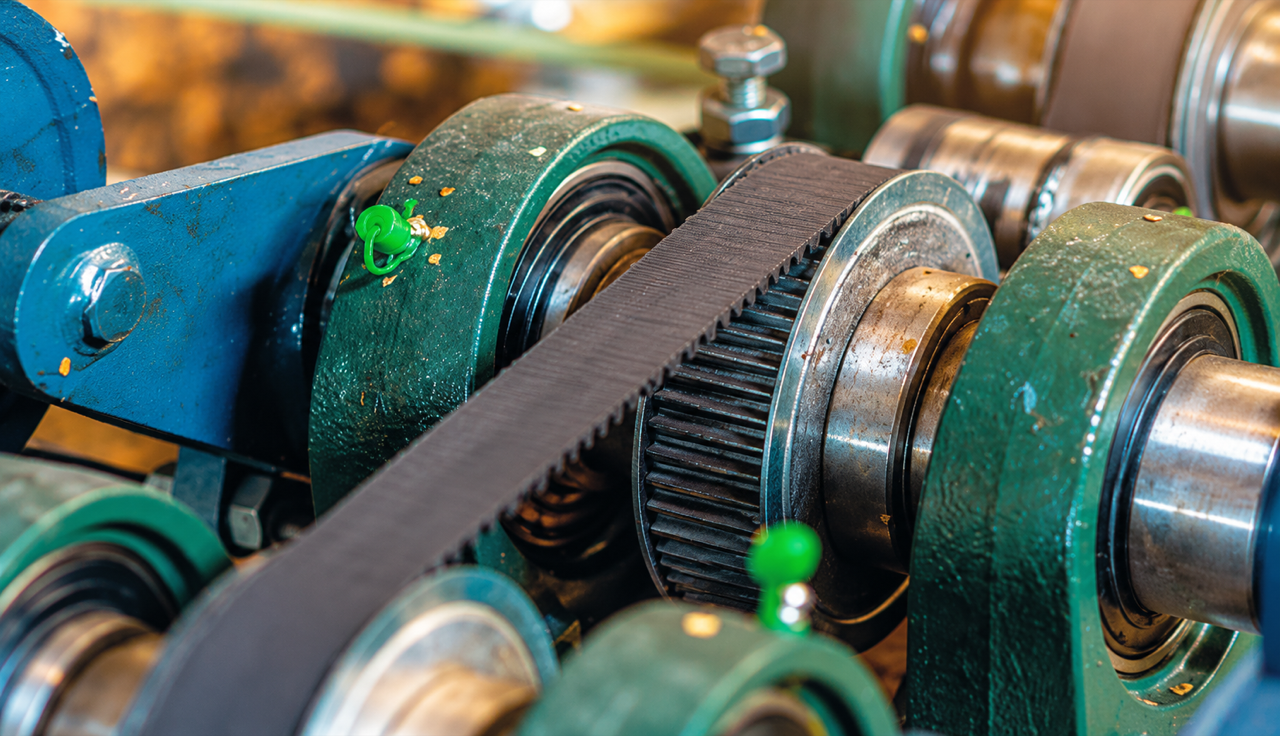
Specifying a timing belt into a high-cycle application is a decision that compounds over time. A belt that performs adequately for the first few months and then degrades faster than expected creates replacement costs, downtime, and potential downstream damage to the drive system it was supposed to protect. The evaluation process that should happen before specifying — rather than after the belt has been running and problems have surfaced — involves looking at several things that aren’t visible in a product catalog or a price comparison.
Manufacturing Process Transparency
The difference between timing belts that hold their pitch accuracy through millions of cycles and those that don’t comes down to manufacturing process control. The most significant variables are the tensile cord lay-up, the compound mixing consistency, and the tooth molding process. A manufacturer who can describe their process controls in specific terms — tolerances maintained, testing performed at which production stages, what quality data they collect and review — is operating differently from one whose quality claims are limited to certifications listed on a datasheet.
Certifications like ISO 9001 confirm that a quality management system exists; they don’t tell you what the outputs of that system are or how tightly controlled the production process actually is. The useful conversation with a timing belt manufacturer goes beyond “are you certified” to “what do your process capability indices look like for tooth pitch and height, and what’s your typical Cpk on tensile cord breaking load.” Manufacturers who run process capability data can answer this. Those who don’t collect it or don’t share it are relying on end-of-line inspection rather than process control, which catches defects rather than preventing them.
Material Specification and Compound Consistency
Timing belt performance in high-cycle applications depends on the rubber compound and the tensile cord holding their properties over time and through environmental exposure. Heat, ozone, oil, and flex fatigue all degrade the base materials, and the rate of degradation depends on the specific compound formulation and tensile cord specification.
A manufacturer who sources rubber compound from their own compounding operation or from a consistent long-term supplier has more control over batch-to-batch consistency than one who sources from spot markets or switches suppliers based on price. Ask about compound sourcing and whether the specification is controlled to a standard or to a performance target. A performance target — the compound must meet these hardness, elongation, and fatigue resistance values — is more meaningful than a recipe specification alone, because it catches supplier variation that the recipe doesn’t control for.
Tensile cord specification matters similarly. Fiberglass and aramid cords behave differently under dynamic loading, and within each fiber type, the twist angle, pick count, and adhesion treatment all affect fatigue life. A manufacturer who specifies their cord by performance — dynamic modulus, fatigue cycles to failure under defined loading — rather than only by fiber type is working with more specificity about what the cord will actually do in service.
Testing Capabilities and Application Data
A timing belt manufacturer whose engineering team can provide dynamic fatigue test data for their products under loading conditions similar to your application is offering something genuinely useful. Static specifications — tensile strength, pitch accuracy, hardness — tell you about the belt as manufactured. Dynamic test data tells you something about how it performs under cyclic load, which is what it will actually experience in service.
Not every manufacturer runs their own dynamic testing; some rely on field experience accumulated across customer applications. Field experience is useful but harder to interpret for a new application that differs from what the manufacturer has previously supplied into. A manufacturer with in-house test capability can run an accelerated life test against application-specific parameters before you commit to a product, which reduces the risk of discovering a mismatch only after the belt is installed and running.
Application engineering support is related. A manufacturer whose technical team asks detailed questions about the application — shaft speeds, load torque, span lengths, pulley diameters, environmental conditions — before recommending a product is doing the work to match the belt to the application. One who quotes the largest standard product in the right pitch without asking these questions is leaving the matching work to you.
Supply Chain Reliability for Long-Run Programs
For applications that will run for years and require consistent replacement intervals, supply chain reliability is as important as the belt specification itself. A manufacturer who can commit to consistent lead times, stable pricing over program length, and lot-to-lot consistency in the product is a different kind of supplier from one who delivers on time when demand is low and extends lead times when capacity is constrained.
Ask about manufacturing capacity relative to your volume requirements and whether your program would represent a significant fraction of their capacity in the relevant product type. A manufacturer for whom your volume is routine is a lower supply risk than one for whom it’s a stretch. Ask about raw material stocking policies — how much tensile cord and compound inventory do they hold, and what’s their exposure to lead time extension if a material supplier is disrupted.
For global programs with multiple assembly locations, the ability to supply consistently from one manufacturing location — rather than from whichever plant has availability — ensures that the belt specification doesn’t drift between facilities. A timing belt manufacturer with a single manufacturing standard applied consistently across their production is a more reliable source for global programs than one where different plants operate to different tolerances.
Qualification Process and Documentation
Before a timing belt goes into a high-cycle application, the qualification process should produce documentation that can be referenced when the belt is up for respecification or when a supplier change is being evaluated. At minimum this includes the belt specification to which the product was manufactured, the acceptance criteria that were applied, and the test data or field data that supported the approval.
A manufacturer who participates actively in the qualification process — providing material certifications, test reports, and process documentation in formats useful for engineering review — is treating the qualification as a technical exercise rather than a sales step. One who provides what’s asked but doesn’t proactively anticipate what’s needed is making the qualification harder than it needs to be.
The qualification documentation also becomes the reference against which future production is evaluated. If the belt specification changes — compound reformulation, cord supplier change, tooling revision — documented qualification data makes it clear what changed and whether requalification is required. A manufacturer who notifies customers of specification changes rather than making them silently is operating with the kind of transparency that makes long-term supply relationships workable.