Lunch Bags for Kids vs Adults vs Corporate: How the Sourcing Brief Differs
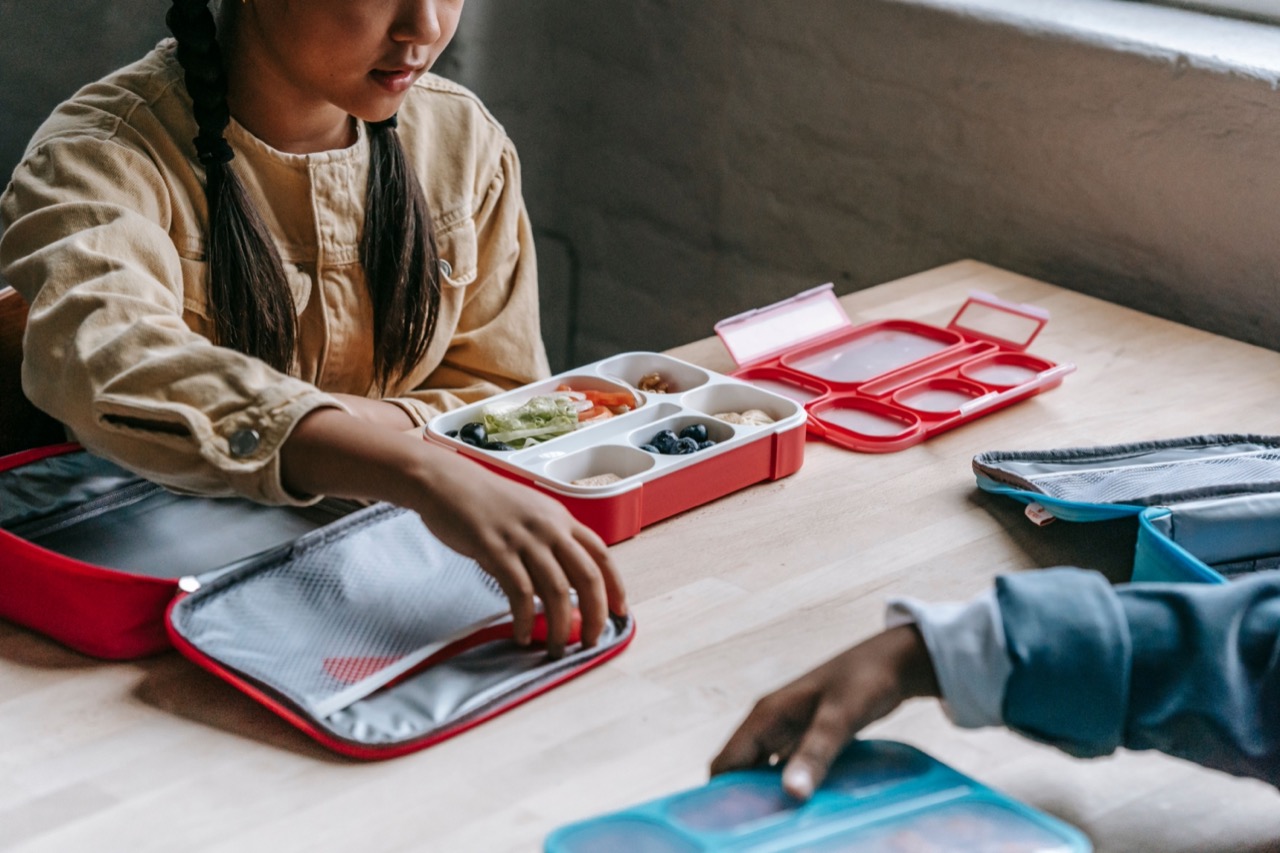
Lunch bags look like a simple product until you try to source one that actually works for a specific use case. The brief for a kids’ lunch bag and the brief for an adult commuter lunch bag and the brief for a corporate gifting program are three meaningfully different documents. Treating them as the same product and sourcing them the same way is how buyers end up with a bag that’s technically a lunch bag but doesn’t quite fit any of the contexts it’s meant for.
Here’s how the requirements actually differ — and what that means for the sourcing conversation.
Kids’ Lunch Bags: Safety Certification Is Non-Negotiable
The first question for any children’s product is material safety, and it has to be the first question — not something you circle back to after you’ve already liked the sample.
For kids’ lunch bags, the interior liner is in direct contact with food and beverages on a daily basis. PEVA and food-grade aluminum foil laminate are the standard liner materials for quality lunch bags. The relevant certifications depend on where the product is being sold: FDA compliance for the US market, LFGB for Germany and broader EU markets, and California Prop 65 for anything sold in California. These certifications cover chemical safety in the liner, foam, adhesives, and any other materials the food might contact.
Ask the supplier for the actual test documentation — the lab report with report number, testing facility, and specific materials tested — not a certificate that doesn’t reference specific results. A supplier who can produce current documentation has actually done the testing. One who sends a generic compliance statement hasn’t.
Beyond chemical safety, kids’ lunch bags have specific functional requirements that adults will tolerate but children won’t. The zipper needs to be easy enough for a child to operate independently — oversized pulls, smooth operation, no resistance requiring adult hand strength. The bag needs to be lightweight when empty, because a heavy bag is one a child leaves at home. And it needs to be easy to clean, because the alternative is a parent hand-washing it nightly, which means the bag gets replaced within a month.
Proportions matter too. A lunch bag designed for an adult portion is oversized for a school lunch and tends to get stuffed to prevent the contents from shifting, which compresses the insulation and reduces cold retention. A properly sized kids’ lunch bag keeps the contents organized and the insulation performing.
Adult Lunch Bags: Insulation Performance and Daily Durability
For adult commuter and workplace lunch bags, the functional requirements shift toward insulation performance and the kind of durability that holds up to daily use over months, not just a few weeks.
The core insulation specification — foam type, thickness, and tested cold retention time under real conditions — needs to be explicit. A lunch bag claiming to keep food cold for six to eight hours needs foam thick enough and dense enough to actually do that in a realistic ambient temperature. EPE foam is the standard for quality adult lunch bags; PE foam is adequate for short-duration use but undersells itself on performance over a full workday.
The liner seal matters alongside the foam. An insulated bag with a liner that doesn’t fully seal — gaps at the zipper, unsealed seams at corners — loses cold retention faster than the foam spec would predict, because air exchange at the gaps is doing more thermal work than the insulation. Quality construction uses a continuous liner that seals completely at the zipper without gaps.
Adult users carry their lunch bags in situations that kids don’t — into offices, on public transit, into gym bags and car trunks. This creates wear patterns that don’t show up quickly in sample evaluation: the bag getting compressed under other items, the handles getting hooked over chair backs repeatedly, the exterior getting scuffed against hard surfaces. The exterior fabric spec — a minimum of 600D Oxford cloth or equivalent — and the handle attachment construction need to be rated for this kind of sustained use rather than occasional handling.
Closure system is a practical specification for adult use. A zipper that can be operated one-handed while the other hand is managing a commuter bag, a laptop, and a coffee matters in the same way a flip-top lid on a water bottle matters. The ease-of-use requirements are less about motor skill and more about context — hands often aren’t fully free.
Corporate Gifting: Brand Longevity Over Use Frequency
Corporate lunch bags serve a different function than consumer lunch bags. The objective isn’t just functional performance — it’s brand exposure over the lifespan of the product. A lunch bag used daily by an employee or client is generating brand impressions every day it’s in use. A cheap lunch bag that gets replaced after two months generates two months of impressions and then a negative association.
For a lunch bag supplier sourcing for corporate gifting programs, the specifications that matter most are the ones that determine longevity: exterior fabric quality, handle attachment construction, logo application durability, and closure system reliability.
Logo application is more critical in corporate gifting than in consumer products because the brand is the point. Screen printing on lunch bags fades with washing, which is a problem for a bag that gets washed weekly. Embroidery is more durable but adds cost and can affect fabric drape on lighter materials. Rubber patch or debossed metal hardware with the brand mark is a premium option that communicates quality and holds up longer than any printed application.
The packaging the bag ships in matters for corporate gifting in a way it doesn’t for consumer products. Individual gift boxes, branded tissue, and a clean unboxing experience add to the perceived value of the gift. For high-tier recipients — clients, executives, long-tenure employees — the packaging is part of the gift. For general employee gifting or trade show distribution, functional bulk packaging is sufficient. Know which context you’re sourcing for before spec-ing the packaging.
Sizing for corporate gifting is usually more conservative than consumer sizing. A medium-sized bag that fits an adult portion without looking oversize holds its shape better, carries better branded proportions, and is easier to package. An oversized bag that looks impressive empty becomes unwieldy as a gift.
Where the Briefs Overlap — And Where They Don’t
Across all three categories, food safety certification is baseline. The liner and foam need to be certified for food contact in the relevant market, regardless of whether the end user is a child or an adult. This is non-negotiable, and it’s the question to ask first regardless of which category you’re sourcing.
Quality of construction at stress points — handle attachment, zipper closure, corner seams — matters across all three use cases, though the load and frequency profile differs. Kids’ bags get thrown; adult commuter bags get compressed; corporate gifts get handled carefully at first and then daily. All three require construction that doesn’t fail visibly within a reasonable use period.
Where the briefs diverge is in the weight you assign to different factors. Safety certification weight is heaviest for children’s products. Insulation performance specification is most detailed for adult commuter use. Brand expression and packaging quality are most important for corporate gifting. Starting with which weight is highest for your specific use case keeps the sourcing conversation focused and prevents the spec from growing in every direction at once.
A supplier who asks which use case you’re sourcing for before quoting is one who understands that the answer changes the product. That’s a useful signal at the qualification stage.